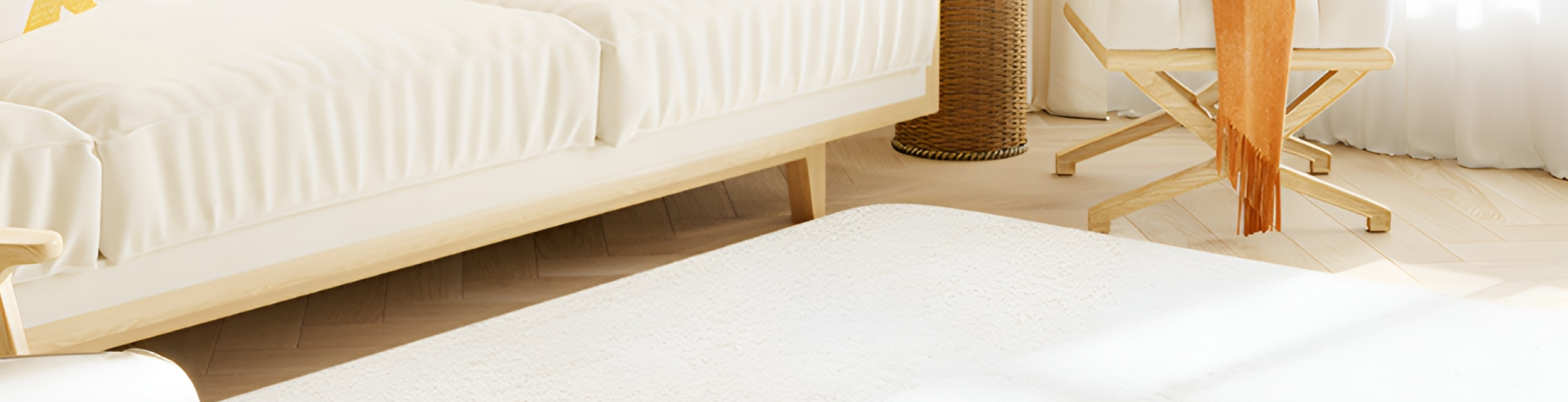


Finding a balance between affordability and luxurious texture is a primary goal for interior designers and home furnishing wholesalers. Plush, high-pile carpets transform a sterile room into a cozy sanctuary, but the challenge lies in securing cheap fluffy rugs that do not sacrifice durability or tactile comfort. This guide analyzes the technical aspects of budget-friendly plush carpets to help buyers make informed decisions.
From a B2B perspective, the procurement of floor coverings involves evaluating material resilience, pile retention, and safety certifications. Whether sourcing for hospitality projects, residential staging, or retail distribution, understanding the difference between various synthetic fibers and weaving techniques is essential to avoid the common pitfalls of low-cost textile procurement.
Readers will explore the critical selection criteria for plush carpets, including the impact of artificial rabbit hair materials on perceived value, the importance of non-slip backing in high-traffic areas, and how wholesale customization can optimize cost-efficiency for specific project requirements.
The Value Proposition of High-Pile Floor Coverings
High-pile carpets, often referred to as shag or fluffy rugs, serve both aesthetic and functional purposes in modern interior design. The primary value lies in their ability to provide thermal insulation and acoustic dampening, making them ideal for bedrooms and living areas. In the competitive home textile market, the drive toward affordability has led to the innovation of advanced synthetic fibers that mimic the softness of organic wool or fur while remaining washable and resistant to wear. For commercial buyers, the objective is to identify products that maintain a "full texture" visual—where the fluff remains upright and voluminous—even after repeated use. This requires a focus on the filling capacity and the tenacity of the fiber attachment to the backing, ensuring that the carpet does not shed excessively or flatten prematurely.
Evaluating Quality in Budget-Friendly Plush Carpets
When sourcing affordable plush textiles, quality is not defined by a high price tag but by the alignment of material specifications with the intended application. The following analysis breaks down the seven key dimensions of quality for budget-conscious procurement.
Material Composition and Feel
The tactile experience of a carpet is primarily determined by the fiber type. Artificial rabbit hair is widely utilized in the budget sector because it provides a super-soft, caressing sensation similar to real fur while being significantly more cost-effective and easier to maintain. This material allows for a high degree of fluffiness, which is essential for achieving the "cloud-like" feel desired by end-consumers.
| Material Type | Tactile Property | Maintenance Level | Best Use Case |
|---|---|---|---|
| Artificial Rabbit Hair | Super Soft / Plush | Medium (Washable) | Bedroom / Nursery |
| Standard Polyester | Smooth / Firm | Low (Vacuum) | Living Room |
| Polypropylene | Coarse / Durable | Very Low | High-Traffic Hallways |
| Mixed Synthetic Blend | Balanced Softness | Medium | General Home Use |
| High-Density Nylon | Resilient / Soft | Low | Commercial Office |
| Faux Fur Blend | Luxury Feel | High | Accent Decor |
Pile Density and Volume
Filling capacity refers to how much material is packed into each square inch of the carpet. A high filling capacity ensures that the carpet presents a full texture visually and feels supportive underfoot. Low-density carpets often feel "thin" and can expose the backing, which reduces both the insulation value and the lifespan of the product. Buyers should check the weight per square meter to verify the actual volume of the fluff.
Maintenance and Washability
One of the biggest advantages of modern synthetic plush rugs is their washability. Unlike traditional wool rugs that require professional dry cleaning, artificial rabbit hair and polyester blends can often be cleaned using appropriate machine or hand-washing methods. This feature significantly extends the service life of the product and makes it a more attractive option for families with pets or children.
Safety and Anti-Slip Engineering
A common failure in low-cost carpets is the lack of a stable base. High-quality budget options incorporate a specially designed anti-slip function on the underside. This prevents the sliding phenomenon that occurs on hardwood or tile floors, which is a critical safety requirement for any residential or office environment to prevent accidents during walking.
Customization for B2B Procurement
For merchants and large-scale decorators, wholesale customization is a vital tool for cost control. By specifying exact sizes, colors, and patterns, buyers can ensure the product fits the specific decoration style of a project without waste. Hebei Yihao Home Furnishings Sales Co., Ltd. leverages large-scale machine-woven production lines to support these customized requirements, allowing for scalable supply chains.
Application Scenarios by Room
Plush carpets are not universal; their application should be strategic. In bedrooms, they provide warmth and comfort for the first step out of bed. In living rooms, they act as an accent (decorative decoration) that defines the seating area. In offices, non-slip plush rugs can reduce noise and add a touch of elegance to a workspace, provided the pile height does not interfere with chair movement.
Long-term Value vs Initial Cost
The "cheap" aspect of a rug should refer to the initial purchase price, but the value is measured by its longevity. A rug that is washable and has a strong anti-slip base offers a lower total cost of ownership than a cheaper alternative that sheds or slides, requiring frequent replacement. Evaluating the quality of the machine-weaving process is key to ensuring the product withstands daily foot traffic.
FAQ
What makes a plush rug feel "soft" without using real fur?
The softness is achieved through the use of high-grade synthetic fibers, such as artificial rabbit hair. These fibers are engineered to have a very fine diameter and a specific texture that mimics the softness and warmth of natural fur, providing a comfortable tactile experience while remaining animal-friendly and cost-effective.
Are budget fluffy rugs difficult to keep clean?
Not necessarily. Many modern synthetic plush rugs are designed to be washable. Regular vacuuming helps remove surface dust, while occasional deep cleaning according to the manufacturer's guidelines can remove stains and maintain hygiene, which effectively extends the service life of the carpet.
How can I tell if a carpet has a good anti-slip property?
Check the backing material. A quality anti-slip carpet will have a specialized rubberized or textured underside designed to grip the floor. In a procurement context, you should request samples to test the grip on different surfaces like tile or laminate to ensure the rug remains stationary during use.
Can these rugs be customized for commercial hotel projects?
Yes, wholesale customization is a standard service for B2B suppliers. You can specify different sizes, colors, and patterns to match the interior design of the hotel. Using machine-woven production lines allows for consistency across large quantities, ensuring all rooms have identical flooring.
Will high-pile carpets flatten quickly in high-traffic areas?
Flattening depends on the pile density and fiber resilience. Carpets with a higher filling capacity and high-tenacity synthetic fibers resist crushing better. To maintain the fluff, it is recommended to vacuum regularly and occasionally rotate the rug to distribute foot traffic evenly.
What is the best way to source high-quality but affordable rugs in bulk?
The best approach is to partner with a manufacturer that owns its production lines and design studio. This eliminates middleman costs and allows for direct quality control. Look for suppliers who provide environmental protection tests and have experience exporting to multiple international markets.
References and further reading
- International Standards for Synthetic Textile Durability and Safety.
- Guidelines for Interior Textile Maintenance and Fiber Care.
- Comparative Analysis of Machine-Woven vs. Hand-Tufted Carpets.